

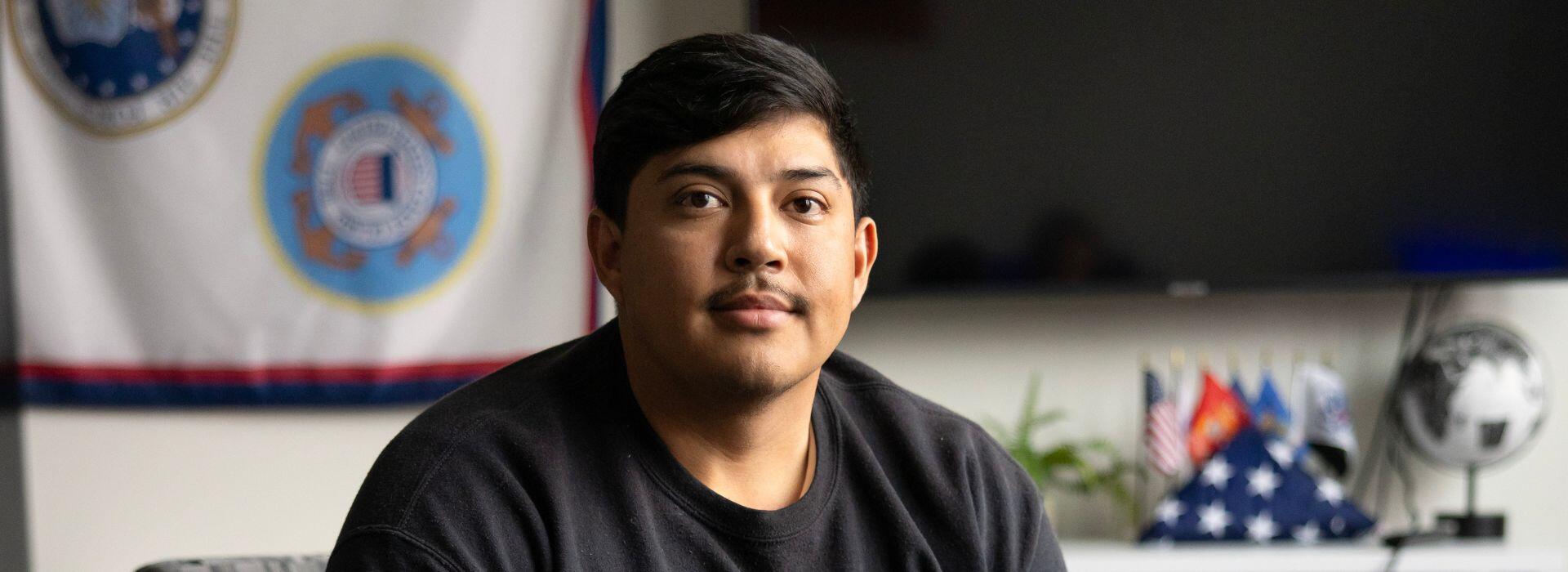
A New Purpose: Lucas on Service and Supporting Veterans
A Q&A with student veteran Lucas Amaya
I’m a first-generation Latino, born in Grants Pass, Oregon. I was raised partly in a small lumber community called Glendale, Oregon, and the rest in a suburban city outside Albuquerque, New Mexico, called Rio Rancho. I enlisted in the U.S. Army in 2014 after high school and completed my service in late 2019.
What inspired me was a culmination of family values, patriotism and educational benefits.
A multitude of things brought me here. OSU-Cascades offered my degree plan in psychology, and I love the outdoor opportunities here.
After graduating, I’d like to work for the Department of Veterans Affairs in a mental health role, specifically in veteran outreach or as a peer support specialist. When I got out of the military, it didn’t seem like the system in place was functioning the way I had expected. It felt strained, with challenges in getting people involved and clashing ideologies around how care should be administered.
I found myself hitting roadblocks and not receiving a lot of support, and when I talked to other veterans, they felt the same way. That led me to start advocating for others and myself within the system. What better person to do that than someone with lived experience? I want to be that bridge for veterans, making the transition to civilian life a little easier and a little kinder.
My interest in psychology comes from asking how I could apply my experience to help and validate others. Systems can sometimes make you feel like you’re losing it or that it shouldn’t be this hard. Being there for others continues that value of service that was instilled in me in the military. I want to carry that forward on the civilian side.
The military helped me cultivate an open mind when it comes to finding solutions and reaching my goals. An educational setting forces you to think critically and with confidence, which I learned in the military.
It means having a new purpose. Our experiences are unique and worldly, and being heard by peers and professors means a lot when it comes to discussions and topics.
Yes. I’ve found support through the Veteran Resources Center in Corvallis and the Veteran Support Center on campus at OSU-Cascades.
I want to be that bridge for veterans, making the transition to civilian life a little easier and a little kinder.

Related Stories
Growing up in Milwaukie, Ore., just 150 miles from Bend, second year student Dakota Rentz always…