

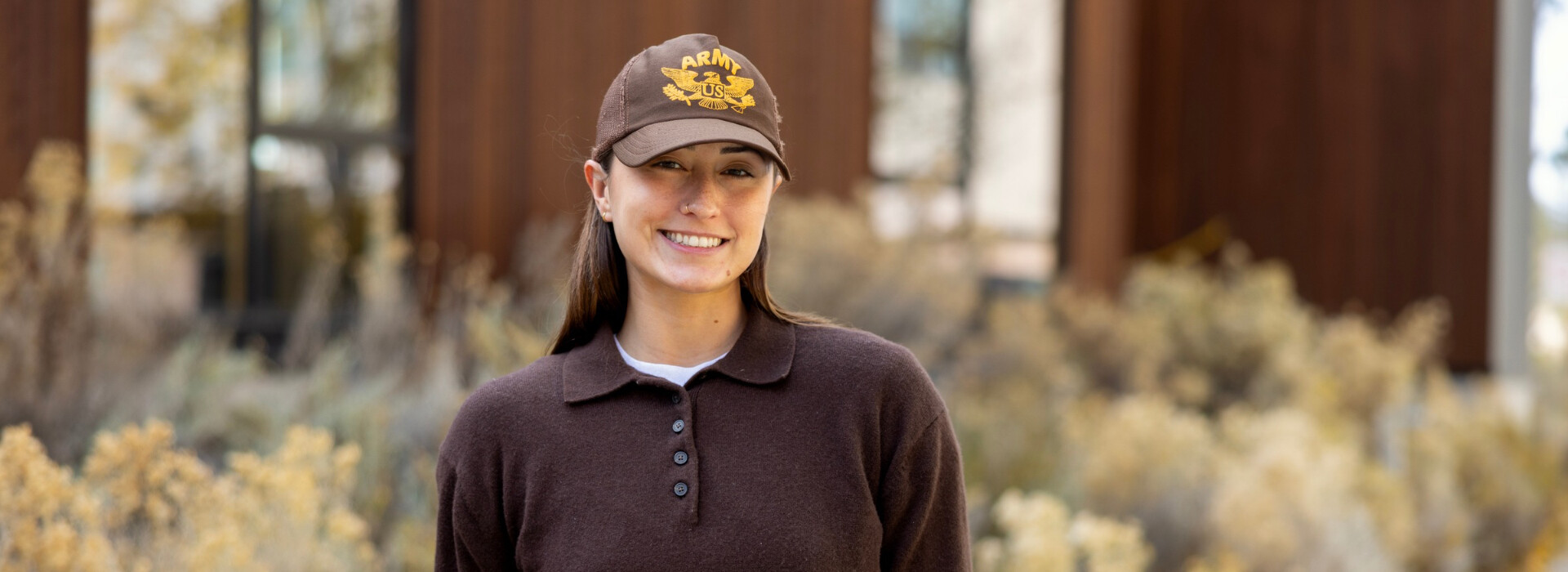
From Military Intelligence to Environmental Conservation
A Q&A with Veteran Chloe Van Witzenburg
I served eight years in the U.S. Army as an All-Source Intelligence Analyst, including a deployment to the Middle East in support of Operation Inherent Resolve. After transitioning out of the military in 2023, I decided to pursue my interests in environmental conservation and the natural world, which ultimately brought me to OSU-Cascades. I’m majoring in Natural Resources, with a developing interest in soil science and its applications in viticulture.
I initially joined the military because I wanted to challenge myself, gain some independence and pursue opportunities that might not have been available to me otherwise. Coming from a working-class background, I knew my financial resources for pursuing higher education were limited, and the Army offered both a pathway to college and an opportunity to experience the world beyond what I had grown up knowing.
Looking back, what stands out most are the people I served alongside and the experiences we shared, particularly during my deployment to Iraq. There was something surreal about being selected, at such a young age, to brief senior Iraqi and coalition military leadership on time-sensitive intelligence, knowing that my assessments could directly inform battlefield decisions and contribute to life-saving outcomes. I had opportunities to collaborate with U.S. intelligence agencies, foreign partners and government officials, gaining a firsthand understanding of the complex relationships and institutions that shape international affairs. It was a rare glimpse behind the curtain, so to speak, into how the world operates beyond what most people ever have the opportunity to see. Being immersed in unfamiliar cultures and entrusted with those responsibilities at such a young age was profoundly eye-opening. My understanding of the world, and my place within it, expanded beyond anything I could have imagined when I first enlisted.
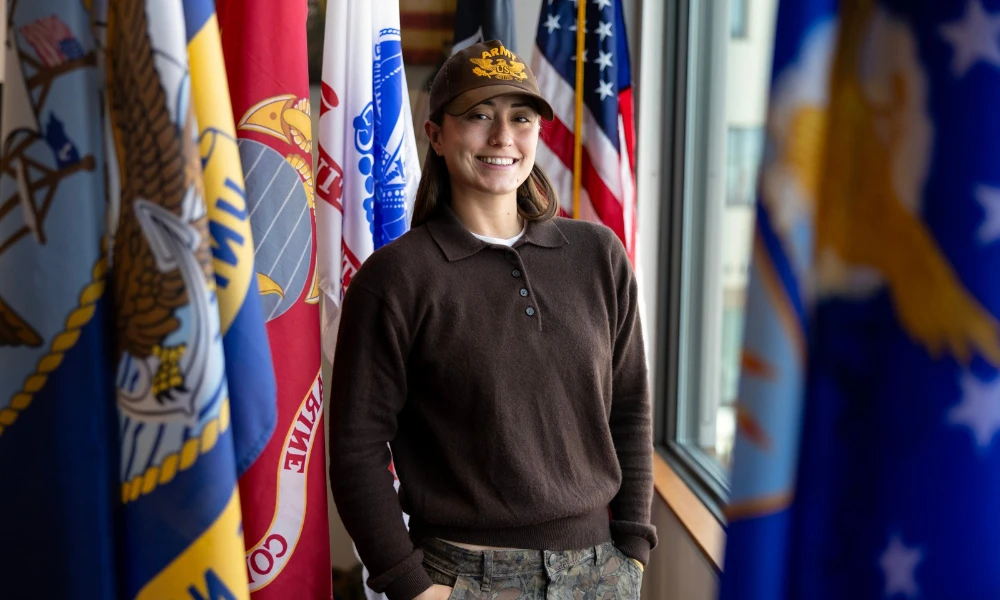
Serving as a woman in a predominantly male environment certainly came with its own challenges. There were times when I felt added pressure to establish my credibility and demonstrate that I was equally capable of meeting the expectations of my role. This was particularly apparent during my deployment with Special Operations Joint Task Force, where women were even less represented than in the conventional military environments I had previously experienced.
Operating in the Levant also meant working alongside various regional partner forces, some of whom came from cultural backgrounds with markedly different expectations surrounding women's roles and authority. Navigating those differences added another layer of complexity to an already demanding environment, particularly as a young woman entrusted with briefing senior military leadership on consequential intelligence matters.
At the same time, I had the privilege of serving alongside incredibly capable women whose leadership, professionalism and expertise challenged many of those assumptions. Those experiences reinforced the importance of advocating for myself, remaining confident in my abilities and navigating cultural differences with both sensitivity and conviction. Above all, they strengthened my belief that credibility should be established through one's knowledge and contributions rather than assumptions about gender.
My military experience strengthened my adaptability, critical thinking and ability to approach complex situations from multiple perspectives. Working in intelligence required me to evaluate information carefully, recognize patterns and make informed assessments, often under considerable pressure and with incomplete information.
Those skills have translated particularly well into my academic pursuits, where environmental issues rarely have straightforward solutions and often require an interdisciplinary approach. Beyond the technical skills, the military instilled in me a lasting appreciation for accountability, collaboration and the importance of looking out for the people around you. Perhaps most importantly, it taught me to remain curious, question my own assumptions and recognize that there's always more to learn from the people and world around me.
To me, Veterans Day is an opportunity to reflect on the people I've served alongside, the sacrifices associated with military service and the experiences that continue to shape veterans long after they've transitioned into civilian life. It's also an opportunity to recognize the diversity of the veteran community and the many different forms that service can take.
I'm profoundly grateful to the generations of women who came before me, whose perseverance and hard-fought efforts secured opportunities and recognition that I have been fortunate enough to experience firsthand. Their contributions laid the groundwork for women like myself to serve in roles that were once inaccessible to us, and I take immense pride in being part of that legacy.
As a woman veteran who is also proudly queer, I've come to recognize how the intersection of our identities and lived experiences enriches the veteran community. Each of us brings a distinct combination of experiences, perspectives and backgrounds to our service. I like to think of our military as a tapestry, one strengthened by the many different threads woven into it. Our differences don't diminish the fabric of our armed forces; they contribute to its strength, resilience and character.
Ultimately, I wish more people understood that there is no singular experience or identity that defines a veteran. Women have made significant contributions throughout military history, and their service deserves recognition as an integral part of that history. I'm proud to belong to a community whose strength is found, in part, in the diversity of those who have answered the call to serve.
As a woman veteran who is also proudly queer, I've come to recognize how the intersection of our identities and lived experiences enriches the veteran community.

Related Stories

Growing up in Milwaukie, Ore., just 150 miles from Bend, second year student Dakota Rentz always…